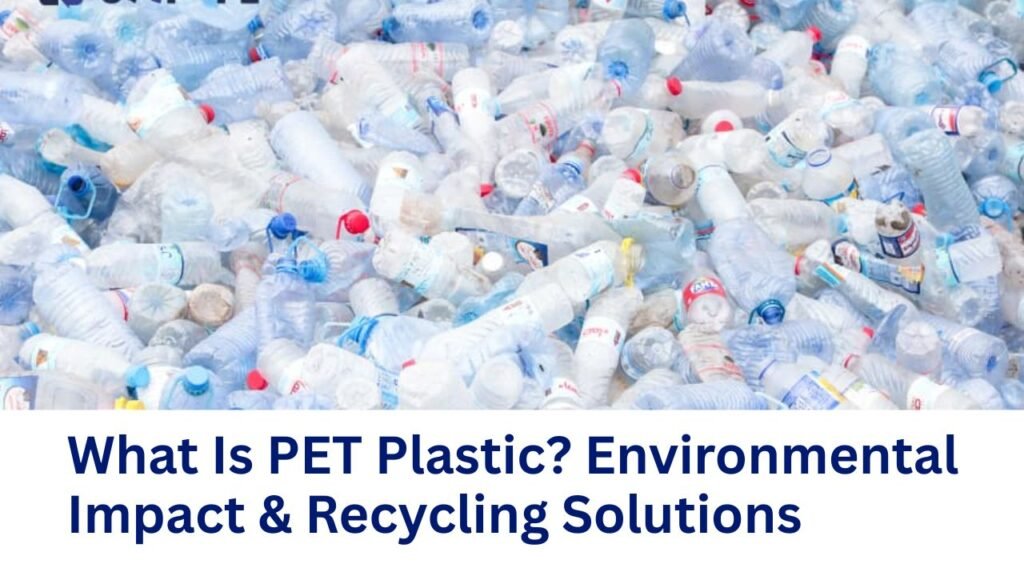
You have seen bottles and containers, and then you wondered what they are made of. Well, they are PET plastic, and one of the most popular plastics currently in use. Despite being lightweight and flexible, they are causing problems to the environment in many ways as people use them once and throw them away.
Usually, the material is made to be used for hundreds of years, but our carelessness is damaging the environment as they settle into landfills or the sea. It can harm us in many ways, as it releases microplastics, which do not degrade easily.
It is not the issue of what is PET plastic but rather the fact that the rate at which it is collected and recycled is low. This is primarily caused by ineffective segregation, lack of awareness and ineffective management and as a result, PET waste does not get to recycling centres.
Why PET Plastic Is Widely Used in Packaging
PET is a short name of polyethylene terephthalate. It is an old polyester that was first invented in the 1930s in the form of a synthetic fiber cloth. Again, some forty years later, the same material was adapted for a new purpose with the introduction of PET bottles.
PET gained popularity due to its strength, clarity, and light weight. These characteristics made it perfect for storing soft drinks initially, and later used as a container for spring and mineral water. With improvements in manufacturing, PET bottles became lighter while staying just as strong.
The main properties, such as strength, transparency, and minimal weight, made PET bottles so popular in beverage packaging. They are simple to manage, secure to transport, and effective to manufacture, attributes that made them a worldwide benchmark for bottled beverages.
Why PET Plastic Has Become an Environmental Concern
PET plastic has become an environmental concern mainly because of its widespread single-use consumption. Mostly, bottles and containers have a short life and are thrown away after just one use. If one does not act today, PET waste can get deposited in landfills, rivers, and oceans. In this case, it can take hundreds of years to decompose. The weak waste management and lack of awareness of recycling can exacerbate the issue. This is mostly faced in the urban regions. As a result, microplastics released from it will put our soil, land, sea, and animals in danger.
PET Bottles Can Be Recycled Again and Again
Understanding what is PET plastic also means understanding its recyclability. PET bottles and containers are not disposable products. The bottle you recycle today can be made into a new bottle or container tomorrow- and recycled again and again. With appropriate systems, PET may continue to receive a second life without losing its usefulness.
The recycling process is also very simple. Collected PET waste undergoes label and cap removal processes and is shredded into small flakes. These flakes are subjected to a rigorous washing process to eliminate dirt, glue, and residues. The PET is melted after cleaning and is turned into recycled raw material and processed into new high-quality PET products.
PET that is contaminated or even damaged to the extent that it cannot be recycled, in these situations, it can be employed in thermal recycling, where its energy content is recovered. This makes PET one of the most resource-efficient and highly recyclable plastics.
Role of Recycling Companies in Reducing PET Pollution
Below are the ways companies can help reduce PET pollution:
- They can help collect the materials in a systematic and organised manner.
- They also use advanced tools to sort the materials to make the recycling process easier.
- Recycling PET, rather than disposing it, reduces the emission of plastic into oceans and the degradation of soil.
- The gathered waste is transformed into recycled PET (rPET) that can be recycled and used in packaging, clothes, and various goods again- no new plastic is necessary.
- PET also consumes less energy during recycling, reducing carbon emissions.
- Reliable recycling companies also educate people on safe plastic disposal methods.
Conclusion
So, what is PET plastic? It is a widely used material. It may seem convenient to use, but if not recycled and dumped in the water and soil, it can cause several harmful impacts on the environment. There is already a demand for recycled PET. The material is widely used across industries, and its market continues to expand. But this is where your decision counts. You can contribute to a healthier environment by taking small steps, such as placing used PET bottles in recycling bins instead of general waste. Take small steps and learn how to recycle correctly. These small actions help in creating a cleaner and safer environment.
Frequently Asked Questions (FAQs)
Q1. Can PET plastic be recycled?
Yes, it can get recycled if done properly. If not recycled properly, it can remain in the environment for several decades.
Q2. Why is single-use PET plastic a major problem?
You may use single-use PET products for only once in your life, but the effects stay longer. It can last for generations, which can make it difficult for recycling systems to manage. So, try to limit the use and reuse if you can.
Q3. What role do individuals play in reducing plastic pollution?
Individuals can contribute in reducing plastic pollution by minimising the use of single-use plastic, ensuring the proper segregation of waste, and contributing to recycling initiatives that make sure that PET plastic is recycled in a responsible way.